Engineering Broadband Connectivity: Wireless Solutions for All
Shruthi Koratagere Anantha Kumar*, H. Sama Nwana, Robert W. Stewart and David H. Crawford
StrathSDR lab, Department of Electrical Engineering, University of Strathclyde, Glasgow, G1 1XQ, United Kingdom
E-mail: k.a.shruthi@strath.ac.uk; h.nwana@strath.ac.uk; r.stewart@strath.ac.uk; david.crawford@strath.ac.uk
*Corresponding Author
Manuscript received 30 April 2026, accepted 06 June 2026, and ready for publication 22 July 2026.
© 2026 River Publishers
DOI. No. 10.13052/2794-7254.033
Abstract
Digital connectivity has become essential for enabling access to education, healthcare, career and business opportunities, and economic well-being worldwide. However, the digital divide continues to hinder inclusive access for all. This article presents a concise study on meaningful connectivity, infrastructure gap, usage gap, demand gap, and the integration of space-air-ground integrated networks (SAGIN). Furthermore, there is a need to understand the market drivers in terms of supply, demand, macro-economy, technology, and policy and regulation. This article highlights how these market drivers play a crucial role in widening the global digital divide. We examine the interdependencies among various stakeholders to address the digital divide. This article uniquely integrates technical solutions with socioeconomic perspectives, outlines pathways towards engineering wireless broadband connectivity, and promotes equitable access for all.
Keywords: Digital divide, demand gap, infrastructure gap, meaningful connectivity, SAGIN, stakeholder collaboration, usage gap.
1. Introduction to Digital Connectivity and the Divide
Digital connectivity has become a cornerstone of modern life, permeating every sector and contributing significantly to economic growth and individual opportunities. Yet despite this progress, over 2 billion people worldwide remain unconnected as of 2026, and the digital divide remains a pressing challenge [1]. The issue doesn’t end by offering the network coverage to those who are unconnected; it is about quality, affordability, reliability, security, and the meaningfulness of that connectivity [2].
Tackling the digital divide requires a multi-dimensional approach that needs to focus on the infrastructure gap, the usage gap, and the demand gap. This is a complex challenge, where no single solution fits all the underserved regions, as each area has its own unique challenges [3]. Key focuses of the United Nations Sustainable Development Goal (SDG) 9 are: building resilient infrastructure, promoting inclusive and sustainable industrialization, and fostering innovation [4]. The studies have shown that there is a vast disparity in 5G coverage in high-income countries (84%) and low-income (4%) countries [1]. Addressing this disparity is dependent on bridging the digital divide and empowering individuals to reap the benefits of the technology. In recent years, billions of dollars in funding through pilot trials, projects, and financial investments have been directed towards a myriad of potential solutions (hybrid architectures and innovative business models) with the aim of achieving an inclusive digital ecosystem for all [5].
Yet technology alone will not build a 100% inclusive digital ecosystem, as this is dependent on the market drivers that determine whether the solution is scalable, affordable, suitable, and economically viable [6]. The telecommunication sector is evolving at a faster rate, and is capital-intensive, highly regulated, and dependent on multiple sectors. Therefore, collaboration among the telecommunication stakeholders, both from the public and the private sectors, is necessary and crucial to avoid resource and effort duplication that slows the process via fragmented initiatives. There is a need to translate the learnings across the stakeholders to ensure faster rollout, which is resilient in nature [7, 8].
Building on the comprehensive analysis presented in the monograph [5], the unique contribution of this paper is to propose a holistic framework, integrating technology, economics, and policy, focused on bridging the digital divide. The pathways toward inclusive broadband futures include: focus on bridging the gaps, invest in hybrid architectures, align with market drivers, and foster stakeholder collaborations. Policymakers need to create an enabling regulatory environment to drive innovation in solutions aimed at building an inclusive ecosystem and lowering the entry barriers for solutions aimed at closing the digital divide while ensuring end-users’ well-being.
This paper proceeds as follows: Section 2 reviews the gaps that need to be addressed in bridging the digital divide. Section 3 highlights the different technologies that could be integrated to address the digital divide while also considering the network economics. Section 4 focuses on the five key market drivers to support a thriving ecosystem for the technological solutions, and stresses the need for collaboration among the stakeholders to achieve the desired results. Section 5 concludes.
2. Understanding the Gaps
Why is there a digital divide? Though technology has progressed over the years, the cost of network infrastructure rollout has increased exponentially. There are several reasons for the existence of the digital divide, and they can be distilled into three broad categories: infrastructure gap, usage gap and demand gap. Addressing these requires the stakeholder to focus on meaningful connectivity, which helps them understand why the digital divide exists, though technology is progressing [5].
2.1 Meaningful Connectivity
The ITU definition for “Universal Connectivity” ensures that everyone has access to internet connectivity, and focuses on the availability of the infrastructure, but not any other factor [9]. As per ITU, billions of people are yet to be connected to the Internet, and several million people living within the coverage regions don’t have ‘meaningful connectivity’ (which measures not just the availability of the digital infrastructure, but also its affordability, availability, accessibility, reliability, and quality of service (QoS) to enable full participation in digital life). Meaningful connectivity “implies regular, dependable, and effective access to the Internet – one that enables users to benefit from online resources and services anytime, and anywhere” [10]. Today, there is an urgent priority to build a digitally inclusive society for all, yet significant barriers exist in the form of infrastructure gaps, usage gaps, and demand gaps, as shown in Figure 1.
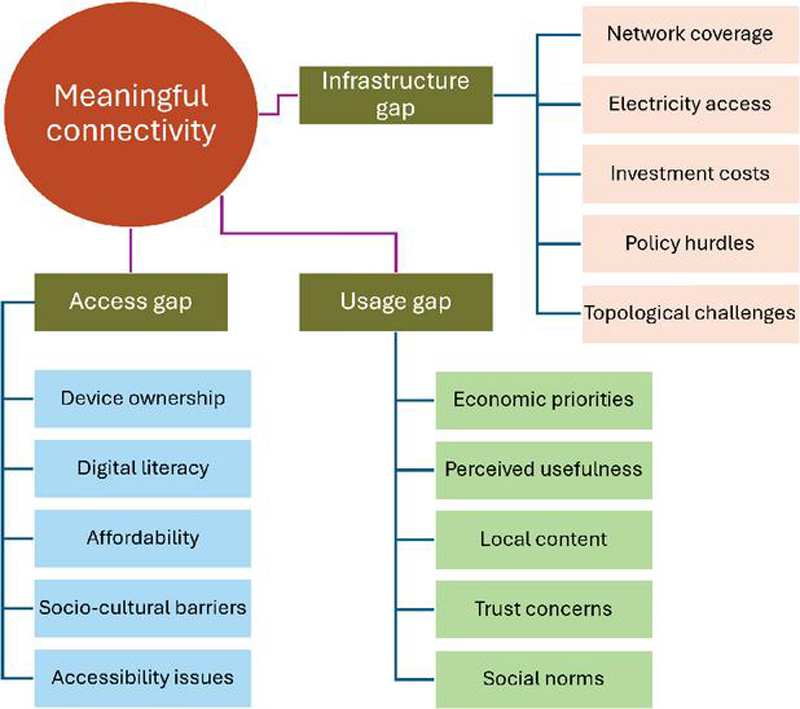
Figure 1 Conceptual framework of meaningful connectivity showing infrastructure, usage, and demand gaps.
2.2 Infrastructure Gap
One of the main reasons that leads to the digital divide is the infrastructure gap. In many regions, the absence of adequate telecommunication infrastructure stems from a lack of network coverage and higher deployment costs, often resulting in poor or no return on investment (ROI) [5]. Beyond connectivity, these regions struggle with supporting infrastructure, such as unreliable electricity, inadequate road access, and logistical barriers. They also face policy and regulatory hurdles that hinder network rollout; for example, complex permission processes, right-of-way (ROW) issues, a lengthy spectrum allocation process, high market entry barriers, and unclear coordination among ministries, departments, and agencies (MDAs) [10].
• Network coverage: Many rural and remote areas are outside the reach of the current telecommunication infrastructure coverage region. The network coverage gap also exists in urban and suburban regions, when there is a blind spot where terrain, vegetation, distance, or clutter disrupts the signal availability.
• Electricity access: Electricity is fundamental in the functioning of the telecommunication infrastructure. End-user devices, equipment, and supporting telecommunication infrastructure would not function consistently without a reliable and accessible power supply. In regions with intermittent or no access to electricity, service interruptions often limit end-users from participating in the digital ecosystem.
• Investment costs: The cost of rolling out broadband infrastructure is exorbitant in regions with infrastructure gaps, and limited demand driven by low income levels further constrain ROI for operators, making it financially challenging. This discourages operators from extending the infrastructure in underserved regions without external financial incentives and subsidies.
• Policy hurdles: Several approaches and efforts aim to bridge the infrastructure gaps, but often encounter regulatory and administrative challenges. Inconsistent policy implementations, for example, ROW permissions, spectrum allocation for new entrants, and slow disbursement of funds aimed to encourage infrastructure deployment. Coordination among the MDAs is fragmented, while the absence of a streamlined process, such as a single window for clearance and permissions, adds further delay.
• Topographical challenges: Terrain, such as mountains, deserts, islands, forests, and inaccessible regions, poses a significant barrier to expanding network infrastructure, driving network costs significantly higher. This also hampers the rollout of the electricity network, network operations, and maintenance.
2.3 Usage Gap
The usage gap arises when the infrastructure exists; however, adoption is limited due to social, economic, and cultural factors, such as [5, 10]:
• Economic priorities: Households often prioritise essential human needs, such as food, water, clean sanitation, healthcare, and education, over access to digital services and the Internet.
• Perceived usefulness: If the broadband access adds limited relevance to their daily life, then the end-users are not keen on opting for digital services.
• Local content: A vast majority of the content available on the Internet is in English, while only 1.5 billion of the 8 billion people speak English. The lack of content in the local language is a significant barrier in many countries.
• Trust concerns: End-users fear that using digital services would harm them through activities such as financial scams, identity threats, digital arrests, privacy breaches, and misinformation.
• Social norms: Prevailing social expectations and cultural traditions can reinforce reliance on non‑digital communication and constrain digital access, especially among women and children.
2.4 Demand Gap
The demand gap highlights another scenario, where infrastructure exists, but individual capability and affordability are a challenge [5].
• Device ownership: Broadband access is dependent on the access of the end-user devices. For many, digital devices, such as smartphones, laptops, or computers, remain out of reach.
• Digital literacy: End-users may lack knowledge of how to use the devices, navigate in the digital ecosystem, use e-services, and access digital governance confidently, which restricts the meaningful usage of the services.
• Affordability: For individuals with low-income levels, affordability of the end-user devices and financially sustainable broadband service plans are essential requirements for sustained adoption.
• Socio-cultural barriers: Traditions and cultural norms restrict certain groups of people from accessing and using digital services and technologies. The barrier goes beyond individual choice, making it harder for them to overcome it without targeted interventions respecting the local culture and inclusivity.
• Accessibility issues: The design phase of the digital ecosystem should also consider people with disabilities. The design should be inclusive and support adaptive technologies.
2.5 Learnings
Connecting the majority of the population is relatively straightforward, but the remaining fraction requires disproportionately greater efforts and resources [10]. The approaches for connecting 68% of the population are insufficient for connecting the rest. Bridging this gap requires the development of light-weight solutions that are scalable, affordable, accessible, and reliable.
3. Hybrid Architecture: Integrated Solutions
Bridging connectivity gaps requires more than a single technology; it requires integrated solutions that are a combination of technologies, suitable for a particular region, balancing cost, economic feasibility, supporting infrastructure, and long-term sustainability. A hybrid architecture approach understands the need for the integration of several technologies to deploy a network that uniquely addresses the digital divide challenges due to the infrastructure gap, usage gap, and demand gaps; refer [3, 5] for details. By adopting a hybrid architecture, the solution would be technologically feasible, socially inclusive, and financially viable as well as sustainable.
3.1 Ground Layer
Ground layer technologies consist of terrestrial networks and include both wired and wireless networks. The ground layer handles the majority of the global Internet traffic through fibre optics and other terrestrial networks. It offers shorter latency, higher throughput, and greater reliability at a lower cost compared to the air layer and space layer. The wired broadband technologies that form the backhaul network include fibre, subsea cables, copper cables, Ethernet, wired telephone networks, wired television networks, wired relay networks, and coaxial cables. It also consists of wireless broadband technologies such as cellular communication systems (2G, 3G, 4G, 5G, and 6G), Wi-Fi, Li-Fi, worldwide interoperability for microwave access (WiMAX), wireless relay networks, long-range wide area network (LoRaWAN), and microwave. Hybrid solutions combine elements of wired and wireless infrastructure, such as satellite integration with terrestrial networks, TV White Space (TVWS), distributed antenna systems (DAS), fixed wireless access (FWA), and community networks.
Wired networks are well-known for their reliability, performance, consistent QoS, and resilience; however, they are not feasible to be deployed everywhere due to high installation costs, complex cabling requirements, skilled personnel, and expensive ongoing maintenance challenges. Hence, wireless networks are gaining popularity as a low-cost solution to bridge the digital divide. Wireless broadband solutions deliver faster data rates, greater energy efficiency, and lower latency, while reducing the need for cabling and enabling flexible deployment with remote diagnostics. These technologies are versatile and are compatible with a wide range of end-user devices.
3.2 Space Layer
The space layer consists of the geostationary orbit (GEO), medium earth orbit (MEO), and low earth orbit (LEO) satellites. A communication satellite is an artificial satellite that creates a communication channel from a source transmitter to relay and amplify telecommunication signals via a transponder to a different receiver on Earth. The footprint of the satellite coverage region is large, as it is located far above the stratosphere (160 km to 35,786 km). Some of the benefits offered by satellite include two-way communication, broadcasting, remote sensing, disaster survey and response, backhaul networks, and maritime and airtime applications. Some of the satellites have fixed coverage, while others have electronically steered antennas to support service on demand.
With the commercial scalable deployment of LEO satellites, the network latency is comparable to the 4G networks, and it can deliver connectivity to any region where the ground network is unavailable. Once the satellite terminals are deployed, the network can be operational almost immediately, unlike terrestrial wired networks. While satellites offer broad coverage and the potential to reduce the digital divide, their construction, deployment, and operational costs in 2026 remain prohibitively high, limiting their economic viability for large‑scale solutions. Some other challenges that exist are limited spectrum resources, orbital debris and space traffic management, propagation delays, standardisation, launch cost and access to space, affordable handsets, and position, navigation, and timing issues.
3.3 Air Layer
In recent years, air layer technologies have been widely explored by stakeholders globally to provide telecommunication services. The air layer consists of high altitude platforms (HAPS), unmanned aerial vehicles (UAVs), and network tethered flying platforms (NTFPs). These technologies are gaining popularity in regions where it is challenging to deploy terrestrial networks, and it is expensive to set up a satellite communication network. The air layer offers the benefits of the ground layer, such as lower latency, lower deployment cost, and reliable QoS, as well as the benefits of the space layer, such as wider coverage area and easier network rollout. Another key benefit of air layer technologies is the ease of interoperability with the end-user devices.
The ongoing research in these technologies explores the design where the network would support International Mobile Telecommunication (IMT) spectrum bands to provide cellular coverage in a larger area, but the size would be much smaller than a satellite, as air layer technologies operate at an altitude between 2 and 50 km. These technologies face multiple obstacles to commercial viability. Examples include power reliability, high cost of maintaining the network in the air, cost-effectiveness, scalability, interference from the terrestrial network, and frequent take-offs and landings.
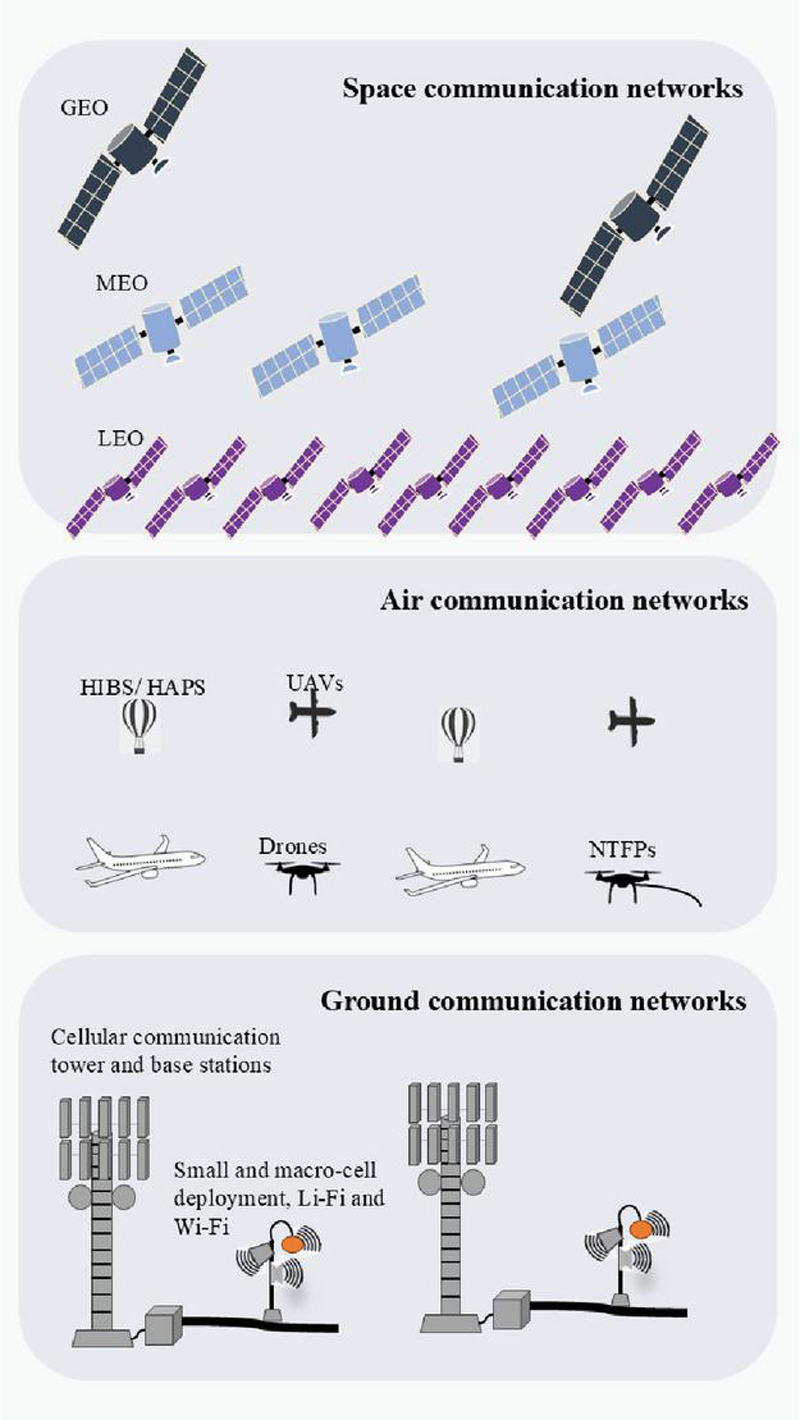
Figure 2 SAGIN architecture – integration of space, air, and ground layers.
3.4 SAGIN
Advancements in the telecommunications industry have spurred the development of a solution that can vertically integrate across all three layers; this architecture is known as the space-air-ground integrated network (SAGIN), as shown in Figure 2 [5, 11, 12]. The architecture aims to provide ubiquitous connectivity and seamless broadband access across the globe. This architecture aims to focus on both urban and rural communities by leveraging a unified, hybrid, resilient communication network to offer an inclusive digital ecosystem for all.
SAGIN is gaining popularity as, individually, no layer is able to provide ubiquitous, reliable broadband access everywhere on the Earth. This integrated architecture offers the benefits of each layer and overcomes the challenges of each layer. This emerging architecture needs to focus on interoperability across the layers, efficient resource planning and management, scalability, and reliability. Additionally, there is a need to understand how user data is shared among layers, ensure data security, coordinate across layers, manage interference, synchronise timing, optimise energy efficiency, and manage device mobility.
4. Market Drivers and Stakeholder Interdependencies
Beyond technology, market drivers and stakeholder interdependencies play a crucial role in addressing the global digital divide.
4.1 Market Drivers
There is a need to understand the key market drivers that impact the digital ecosystem in any country; these factors determine whether a technology or solution scales successfully or declines [5]. The market drivers determine the solution’s economic feasibility, while societal returns that improve the overall well-being of people facing the digital divide are to be considered. The key market drivers include [10]:
• Demand: Demand assessment helps in understanding affordability, priorities, and usage patterns. Without a clear demand, any proposed solution would not scale. To motivate operators to deploy the network, there must be commercially viable demand or support for the business in the form of subsidies and interventions.
• Supply: The technology deployments and operations require supportive infrastructure in terms of spectrum availability, electricity access, infrastructure providers who would deploy the networks, distribution channels, logistics and supply chain, equipment manufacturers, interoperability among the devices, and a strong distribution channel. Additionally, affordable end-user devices would support scaling of the infrastructure deployment.
• Technology: For a technology uptake to become widespread, it should be readily available, scalable, interoperable, and standardised, and should support innovation. A solution should be technologically feasible in the region of interest, considering the infrastructure gap, usage gap, and demand gap. In addition, the design must accommodate future upgrades at reduced cost, thereby ensuring that the overall total cost of ownership (TCO) remains sustainable. The technology determines the penetration of digital tools, artificial intelligence (AI) usage, and automation.
• Macroeconomy: Economic factors, such as gross domestic product (GDP), consumer spending trends, inflation, interest rates, tax, customs, average revenue per user (ARPU), and equipment cost, determine the network uptake. Even if demand and supply exist, and technology is ready, high inflation, weak consumer spending, or prohibitive equipment costs can stall adoption. Economic parameters must be optimized to attract investment in solutions and technologies.
• Policies and regulations: How well a business thrives in a market ecosystem is determined by the policies and regulations laid out for the market. The policies and regulations should offer a supportive ecosystem for businesses to grow, as well as protect consumers and their well-being. The adoption of a technology or a solution focusing on the digital divide is determined by the spectrum cost, RoW, import taxes, new entrant market barriers, ease of licensing, ease of obtaining approvals and permissions, digital inclusion policies, roadmaps for achieving meaningful connectivity, and coordination among the MDAs [8, 13]. Therefore, policies and regulations act as a key enabler or barrier for scaling the digital ecosystem and bridging the digital divide.
Hence, these aforementioned five drivers need to align, ensuring that economic feasibility is achieved along with social returns for tackling the digital divide and enhancing meaningful connectivity.
4.2 Stakeholder Interdependencies
The telecommunications market is driven by collaboration among the key stakeholders, which includes telecom service providers (TSPs), telecom regulatory bodies, international organisations, standardization bodies, equipment manufacturers, and end users. The telecommunication sector relies on several supporting MDAs, and efficient collaboration among them is essential to ensure seamless performance, coordinated policy implementation, and efficient delivery of services [14, 15]. Some of the key ministries include:
• Power/energy ministry: For reliable electricity for the network operations, and powering end-user devices.
• Transport and roadway ministry: The network rollout and its maintenance are highly dependent on access to the location of interest. Well-connected roadways would ensure an efficient supply of the components required for deploying and maintaining the network.
• Education ministry: For enhancing the digital literacy skills and increasing the service adoption of the end-users.
• Information and communication technology (ICT) ministry: They provide the overarching digital strategy for the country, set targets for digital inclusion, and coordinate the national broadband targets. They are helping with the technology rollout.
• Finance ministry: They influence the rollout of the network through import taxes, customs duties, subsidies, tax incentives, and investments. They design financial policies that would enable or act as a barrier to digital connectivity.
• Commerce and manufacturing industry: They encourage the local manufacturing of the products to lower the equipment and end-user device cost, which in turn would improve the ROI and affordability.
The telecommunication sector also coordinates with ministries, such as the urban development and housing ministry, the rural development ministry, the healthcare ministry, the defence and home affairs ministry, and the environment ministry. When several stakeholders and MDAs are involved, there is a need to ensure that the coordination efforts are in the right direction and minimise resource duplication to ensure that the right solutions reach the underserved communities sooner.
5. Conclusion - Pathways Towards Inclusive Broadband Futures
Digital connectivity is becoming fundamental for social and economic participation for an individual; however, the digital divide continues to exclude billions from tapping into their potential. This paper proposes a holistic framework integrating technology, economics, and policy to address this challenge. Predominantly, a combination of infrastructure gap, demand gap, and a usage gap coexists for underserved communities, and wireless approaches are generally more cost‑effective than extending wired networks, offering a pragmatic path to connectivity. There is a need for exploring hybrid network (space, air, ground, SAGIN) architectures that help in rolling out a technologically feasible solution that offers adequate coverage, QoS, throughput, latency, and reliability, along with being economically viable for operators and affordable for end-users.
The work also focuses on the need for technological innovation to align with market drivers and stakeholder interdependencies. The pathway for engineering broadband connectivity is dependent on bridging the existing gaps, investing in hybrid architectures, aligning with market drivers, and fostering collaboration among stakeholders. The innovation at scale is driven by the enabling regulatory environments that support businesses and protect end-users. Together, these actions would ensure that the digital ecosystem is inclusive for all and that SDG 9 is achievable.
Acknowledgement
The author gratefully acknowledges Dr. Sudhir Dixit, Editor-in-Chief, for his kind invitation to submit this manuscript.
References
[1] International Telecommunication Union, “Measuring Digital Development: Facts and Figures 2025,” 2025, accessed: 2026-04-22.
[2] World Bank, World Development Report 2021: Data for Better Lives, World Bank, Washington, DC, 2021.
[3] S. Dixit and et al, “IEEE FNTC CTU Newsletter,” IEEE Network, vol. 40, no. 2, pp. 16–25, 2026.
[4] United Nations, “Sustainable Development Goal 9: Industry, Innovation and Infrastructure,” 2015, accessed: 2026-04-22.
[5] S. K. A. Kumar, Wireless Broadband Access to Bridge the Digital Divide, Springer Nature Switzerland, 1 edn., 5 2026.
[6] OECD, “Bridging the Digital Divide: Policy Considerations,” OECD Digital Economy Papers, OECD, 2020.
[7] S. Lee, Stakeholder Engagement in Telecom Policy: A Comprehensive Guide, Wiley, 2025.
[8] Ericsson and ITU, “Bridging the Digital Divide: A Data-Driven Approach to Transformational Connectivity,” 2025, accessed: 2026-04-22.
[9] ITU, “Universal and Meaningful Connectivity,” 2024, accessed: April 17, 2026.
[10] H. Nwana, The Connectivity Crisis: Half the World Left Behind, Strathclyde Academic Media, 2025.
[11] S. Zhang et al., “Space–Air–Ground Integrated Wireless Networks for 6G: Basics, Key Technologies, and Applications,” IEEE Access, vol. 13, pp. 12345–12367, 2025.
[12] J. Chen et al., “Space–Air–Ground Integrated Network (SAGIN): A Survey,” IEEE Communications Surveys & Tutorials, vol. 26, no. 1, pp. 1–35, 2024.
[13] Fiber Broadband Association, “The Impact of Fiber Broadband on Rural and Underserved Communities,” 2025, accessed: 2026-04-22.
[14] World Economic Forum, “Here’s how we can work together to bridge the digital divide,” January 2023, accessed: 2026-04-22.
[15] V. M. Gallegos-Rejas and et al, “A multi-stakeholder approach is needed to reduce the digital divide and encourage equitable access to telehealth,” Journal of Telemedicine and Telecare, vol. 29, no. 1, pp. 73–78, 2023.
Biographies

Shruthi Koratagere Anantha Kumar is a Research and Innovation Associate with the StrathSDR lab at the University of Strathclyde and serves as an Associate Consultant with Real Wireless and a Technical Consultant with Cenerva. She also works as an independent consultant, specializing in rural telecommunication, techno-economic feasibility assessment, sustainability frameworks, resilient infrastructure, disaster resilience, and educational outreach programs. She was a Visiting Faculty member with George Mason University, Fairfax, USA. She earned her Ph.D. degree from the University of Strathclyde, Glasgow, UK, in 2023.

H. Sama Nwana, CITP, FBCS, FIET, CEng, BSc (Hons), MSc, PhD, MA (Cambridge), MBA (Dist.) (London Business School) is Managing Partner, Cenerva Ltd UK (www.cenerva.com) – a boutique training-led consultancy on all TMT regulatory across emerging markets based in London. He is a Full Visiting Professor at the University of Strathclyde (UK) and other higher institutes. His most recent (2025) book relevant to this paper is titled The Connectivity Crisis: Half the World Left Behind, published by Strathclyde Academic Media.

Robert W. Stewart is the Director of the Strathclyde Software Defined Radio (StrathSDR) team. Currently, the team is working on several DSIT-funded 5G projects, including the lead partner with Cisco Systems on the Open Networks Shared Spectrum Innovation Environment project, which includes other industry partners, AMD, BBC R&D, Neutral Wireless, and University of Glasgow. Bob is also the Director of the University of Strathclyde startup company, Neutral Wireless Ltd, which has developed its own private 5G radio for deployment in private networks and has worked for some high-profile events.

David H Crawford received BSc, MSc, PhD, and MBA degrees from the University of Strathclyde, Glasgow, UK. After spending several years in industry in various roles related to telecommunications and digital signal processing, he returned to the University of Strathclyde in 2011 to run the then newly-formed Centre for White Space Communication. David manages a programme of industry/academic collaborative projects at the University of Strathclyde, focusing on shared spectrum, private 5G networks, and future advanced communications. He has championed the sharing of spectrum for over a decade and continues to pursue increased spectrum sharing as an overarching strategy for the future management of spectrum.