Sustainable Digitalization & Connecting the Unconnected
Fisseha Mekuria1,* and Laurence Banda2
1Sustainable Digitalization Research Centre (SDRC), Malmö University, Sweden
2University of South Africa, Pretoria, South Africa
E-mail: fisseha.mekuria@mau.se
*Corresponding Author
Manuscript received 11 June 2026, accepted 21 June 2026, and ready for publication 22 July 2026.
© 2026 River Publishers
DOI. No. 10.13052/2794-7254.032
Abstract
This paper presents a framework for sustainable digitalization and entrepreneurial ecosystems for rural areas. Innovation on sustainable ICT technologies to realize affordable broadband connectivity for rural and underserved communities is a crucial component of the effort to achieve the aim of “leaving no one behind by 2030” as championed by the United Nations and the IEEE “connecting the unconnected” initiative. Sustainable digitalization and broadband connectivity requires the creation of a digital entrepreneurial rural ecosystem (DERE) described in to sustain the broadband connectivity infrastructure, develop innovative services and benefit the local rural communities. The paper describes a rural urban social network (RUSN) ecosystem and two interconnected interventions necessary to achieve digital inclusion with rural communities as a vehicle to achieve affordable connectivity and sustainable digitalization. A definition of the framework for sustainability and its application to the RUSN ecosystem partners and components is described. Important concepts including affordability of broadband services, sustainable business models and co-creation of relevant ICT services involving beneficiary rural communities are presented. The sustainable digitalization framework is presented as a proof of concept on rural SMEs and the DERE digital entrepreneurship ecosystem and tested on four sites deployed in South Africa. Discussions on regulatory and policy interventions to enable sustainability and the business models for the DERE ecosystem partners are presented.
Keywords: Digital entrepreneurial rural ecosystem (DERE), rural urban social networks (RUSN), sustainable digitalization, connecting the unconnected, emerging digital technologies.
Introduction
The research and development work described in the INGR-IEEE-CTU report-2024 [1], aiming to connect the unconnected is a vital component of the sustainable digitalization drive by society and industry. In this paper this is extended by a digital entrepreneurial rural ecosystem (DERE) [2], which aims to promote digital inclusion by accelerating the deployment of innovative and affordable digital broadband connectivity solutions and an entrepreneurial ecosystem. This is achieved by building a framework for sustainable digital business enterprises, which is expected to accelerate ICT service creation and a digital innovation ecosystem for rural communities. The long term objective of any related digital sustainable transformation initiative should be to develop an Africa-wide digital connectivity and accelerator program in the short run and to facilitate a continent-wide digital connectivity and entrepreneurial ecosystem (ES) in the long term. The DERE ecosystem model incorporates frameworks to assess and implement the model to enable co-creation with local communities and possible uptake in regional African countries. The specific objectives of the described DERE model is to achieve the following outcomes:
1. Support the development of an enabling telecom regulatory environment, including capacity building in networking for sustainability for national telecom regulators and relevant aspects of emerging wireless standards, spectrum innovation technologies, and associated business ecosystems.
2. Strengthen the digital SME ecosystem existing in rural communities (e.g., accelerator labs and innovation hubs). This is aimed to develop innovative ICT services and inclusive business models for the different layers of digital connectivity and for affordable rural network innovation.
3. Enable broadband network innovation and the concept of networking for sustainability. This is to support internetworks powered by green energy technologies to facilitate affordable broadband and digital inclusion for the rural and underserved population.
4. Promote a three-pronged approach to ensure sustainability, complementing existing networks and integrating new network technologies such as 5G which are expected to propel development of 4th Industrial Revolution (4IR) services.
5. Identify synergetic opportunities for emerging network technologies (such as AI in wireless/mobile communication and software defined networks) to facilitate rural and underserved communities to benefit maximally from digital transformation, especially in driving sustainable economic development and a network of rural ICT SME businesses.
Sustainable connectivity and digitalization is one of the tools for socioeconomic change and sustainable development in emerging economy countries, that will assist in tackling unemployment, poverty, and income inequality [1, 2, 3]. Research shows ICT services could enable sustainable development in many sectors of the economy. An International Telecommunications Union (ITU) study has shown that a 10% increase in broadband penetration can raise economic growth by up to 1.4% and that doubling broadband speed can increase Gross Domestic Product (GDP).
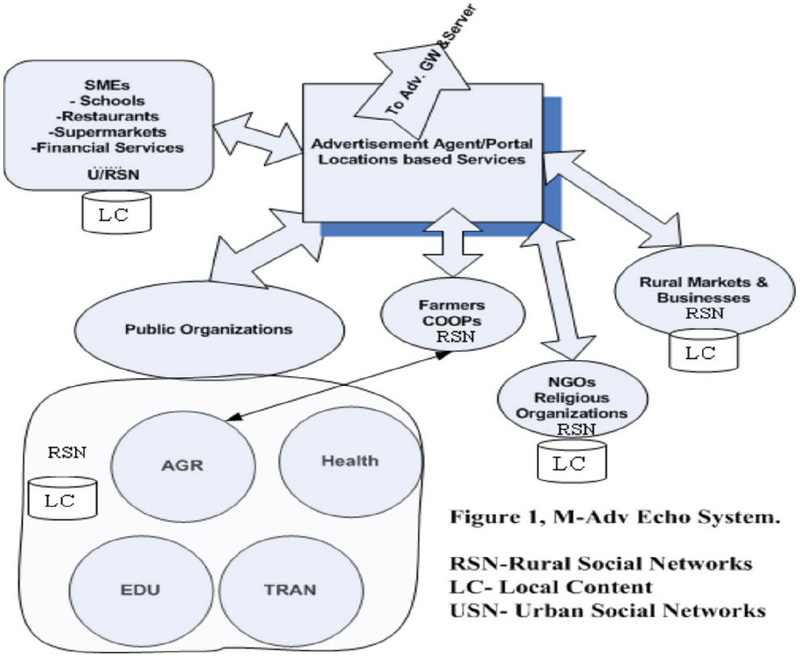
Figure 1 A picture of rural/urban sustainable social network & ecosystem.
The paper subsequently discusses ecosystems for rural/urban social networks (RUSN), and the development of a locally relevant data base, to enable locally relevant innovative mobile cloud services, based on an indigenous social network data base. Subsequent sections discuss the use of the RUSN to enable local digital entrepreneurs and local network operators for sustainable digital transformation. Sustainable digitalization with respect to 5G deployment and business value creation is also discussed. Finally enabling telecom regulation and policy is presented as a tool to achieve infrastructure sharing, inclusive and sustainable digitalization.
Sustainable Social Networks & Ecosystems
One way to promote sustainable digitalization and entrepreneurial ecosystems is the concept of Rural/Urban social networks (RUSN) and associated local databases, as shown in Figure 1 below. These can provide a way to solve some of the affordability problems associated with mobile web services. Some of the issues that must be addressed to solve the affordability of innovative mobile data services in developing countries are; (1) The placement of a regulatory and policy mechanism to promote a collaborative working relationship between network operators and 3rd party local mobile service & content creators. (2) Regional research initiatives and innovation-hubs in the area of rural/urban social networks (RUSN) to promote indigenous local mobile content creation. The formal creation of indigenous databases and validation for a general ICT for development (ICT4D) intervention in rural communities is well studied in reference [6]. However, in this paper a simple model of an ecosystem of RUSN based on a mobile local content and mobile advertisement service for improved affordability is presented. The model uses a local rural market scenario to describe the usage of the model by social networks that are created as a natural consequence of the interaction in the RUSN members. Figure 1 shows a RUSN ecosystem based on mobile services, involving both rural and urban social networks, with a further public and private organizations contributing to the ecosystem. Social networks can be public or private organizations, cooperatives (COOPs), associations dealing with services such as health, agriculture (AGR), business, transport (TRAN) or education (EDU). These social network groups can build their own local content database, share and sell content to services providers, public and private organizations and other RSN groups. These local content databases (LC) contain a wealth of information for timely, relevant and location based M-Adv services.
The aggregate of these databases also provide a platform which can be used by the network and service providers to perform customer behavior studies to build next generation intelligent mobile advertising systems. Furthermore, the model promotes a negotiation platform between mobile network & service providers and the social networking groups. The negotiation can result in discounted prices for the RUSN members on basic and mobile value added services. However, this depends on how much the RUSNs invest on developing their local mobile content and the mobile advertising income through the M-adv advertising system.
Network Sharing for Affordable Digitalization
The traditional universal access funds (USF) used to address the digital divide between rural and urban areas of developing countries is becoming insufficient to bridge the gap between the information haves and those who cannot afford to buy the services [6, 9]. This is clearly seen by the fact that mobile cloud service costs become unaffordable for a significant percentage of subscribers, and despite available mobile coverage the number of active users of both basic and value added services and mobile cloud services is limited in developing countries [1, 4, 10]. This is more profound in rural and marginalized communities, and a crucial parameter to be addressed to guarantee the success of future content based mobile cloud services. Furthermore, if this trend continues new mobile intelligent cloud services will have limited footprint and at the same time result in significant number of people being left outside of access to public and relevant digital information. Therefore, to reduce the cost of mobile broadband infrastructure and service provision a new techno-economic model with long term planning is necessary.
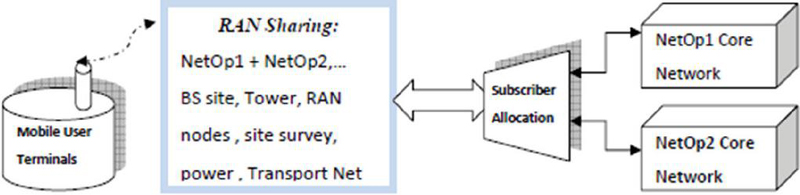
Figure 2 Infrastructure sharing for affordable digitalization.
Radio access network (RAN) sharing by competing operators, is one of the effective tools and long term solutions to reduce both cost of infrastructure deployment and power consumption of 3–5G broadband mobile networks [4, 5]. As shown in Figure 2, the main CAPEX load of broadband wireless infrastructure is the cost of the RAN and associated deployment cost [4, 12]. The two network operators, NetOp1 & NetOp2 can use the network sharing opportunity to reduce the cost of mobile broadband infrastructure. The CAPEX savings can be in sharing base station (BS) cell site, BS tower, BS Power supply and site survey. A number of European mobile operators are opting to this scheme, to reduce the cost of mobile cloud services, made possible by network sharing agreements [4, 10]. This is motivated by the reduction in deployment, operational and power consumption costs, that is achievable with network sharing. It is for example estimated that the deal by network operators T-Mobile and 3-mobile, recently reported could achieve a cost savings of 2 Billion UK Pounds, a 30% reduction of base station sites and a 70% reduction of the power consumption by the network nodes [2, 3, 6].
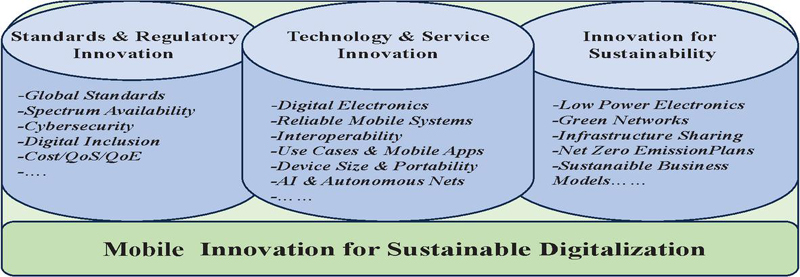
Figure 3 Innovation & sustainable digitalization in mobile development.
Mobile Innovation & Sustainable Digitalization
The main purpose of mobile innovations and standards is to achieve a sustainable digitalization of society and provide advanced digital services wirelessly anywhere and anytime. Furthermore, mobile technology standards will not only address anytime and anywhere wireless connectivity, but also personalized service experiences, societal services, drive business and industrial growth, contributing to an inclusive, sustainable and networked digital society. In this respect mobile operators and rural internet service providers (ISPs) are crucial players and need to develop innovative frameworks and embrace sustainable digitalization while deploying emerging digital technologies (EDTs) in connection with emerging mobile technology standards.
This will help to improve the efficiency of resource utilization, relevance and sustainability of societal digital services. Innovation and sustainable digitalization are expected to play a crucial role in the formulation of the digital transformation agenda of global communities and hence mobile technology ecosystem players have a crucial role to play in this transformation agenda. The principal definition of Innovation and sustainable digitalization for mobile systems includes the three pillars shown in Figure 3: Standards & Regulatory Innovation, Technology & Service Innovation, and Innovation for Sustainability. Mobile industry stakeholders dealing with digital transformation and service provision will need to address these factors for successful operational efficiency, business development, and innovative service creation.
Furthermore, mobile industry is required to develop frameworks to continuously engage in innovative mobile services creation and sustainable business model development in order to be able to compete and survive in a global digital world shaken by the emergence of 5G-advanced technologies and Generative AI techniques. At the same time digital innovation should result in intellectual assets and become a requirement for additional function by mobile operators to manage and translate these intellectual properties into commercial products. Figure 4, shows a few of the connections between emerging mobile digital technologies, and the core services and use cases the standards indicate. However, the figure also shows further use cases such as smart environmental monitoring could be supported with 5G EDTs. The International telecom union (ITU), IEEE, GSMA, ETSI and other regulatory and policy forming organizations are all working to enable innovation and sustainable digitalization through mobile technology standards and the creation of global consensus for their seamless integration with emerging digital technologies [3, 6, 10].
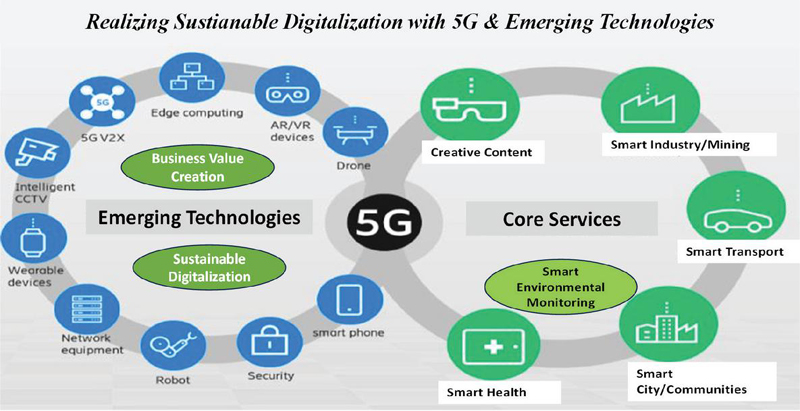
Figure 4 5G & emerging digital technologies for sustainable digitalization.
Role of Policy and Telecom Regulation
Apart from incentivizing mobile operators to share infrastructure which reduces cost and wastage of resources, important mechanisms by telecom regulators and policy makers need to encourage operators to invest in sustainable frameworks in their technology deployment. This will help operators to reduce CAPEX and OPEX, operational and service provision costs while at the same time develop environmentally sound and life cycle aware mobile networks. Governments and regulators can support and influence operators’ choice of sustainable business models through: enabling spectrum policy and licensing conditions, energy efficiency standards, carbon reporting and taxation mechanisms, and incentives for use of renewable energy and infrastructure sharing [2, 3, 4]. Effective regulatory frameworks align market incentives with sustainability objectives, enabling mobile operators to invest in green network technologies, electronic device design techniques and life cycle analysis, while maintaining competitiveness [3].
Factors for Rural Sustainable Digitalization
Sustainable rural digital businesses require interfaces to a number of sectoral, industry and community organizations to be able to design sustainable business models to maintain and grow their business. Rural digital entrepreneurs need these healthy interfaces and consider the factors affecting their business. This will provide them with the necessary skills to develop their digital business in a more difficult environment with low income population and low basic infrastructure availability. However, as society is becoming increasingly dependent on fast reliable broadband connectivity for running government institutions, private businesses and social services, the digital entrepreneurial rural ecosystem (DERE) requires these societal and skill factor interfaces [2, 3, 4], to succeed and maintain its business as shown in Figure 5. The connections and interfaces will enable the digital entrepreneurs to design a more relevant and reliable digital services which are necessary with low-cost broadband Internet access, development of innovative mobile services and the building a sustainable rural digital society.
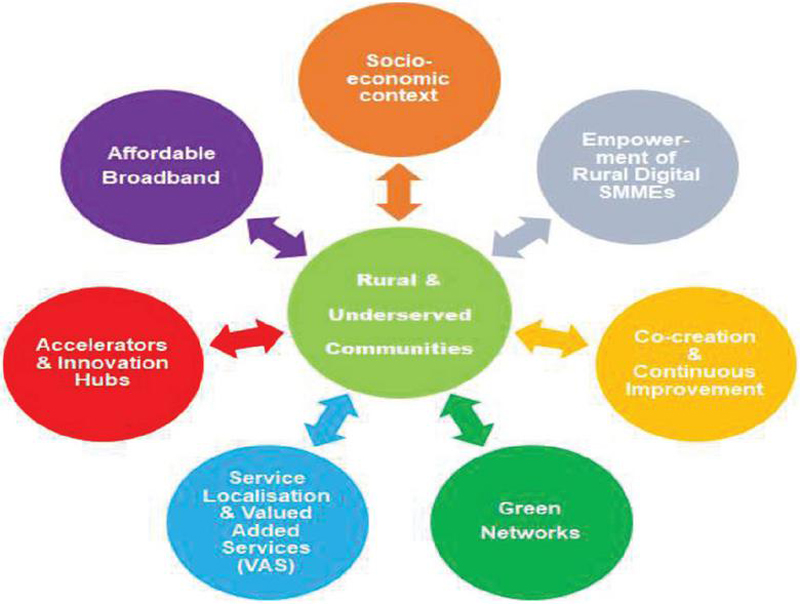
Figure 5 Factors to consider for sustainable digitalization in a rural community [2].
Some of the factors such as service localization, co-creation and green networks go beyond the traditional connectivity infrastructure and provide the rural digital entrepreneurs (RDEs) the necessary tools to grow their sustainable digital businesses. The connection to innovation accelerators and local innovation hubs will improve the growth of innovative and locally relevant ICT services benefitting health, agriculture and transportation sectors, and creating necessary youth employment. The rural entrepreneurship project created by the CSIR-UNDP is a good example in this respect [2].
Conclusion
The paper presented an ecosystem based rural/urban social network (RUSN) framework for sustainable digitalization in developing economies. The framework was developed based on a locally relevant data base, which made the emergence of locally relevant innovative mobile cloud services based on an indigenous social network data base, involving most of the stakeholders in the local community and sectors of the economy. Subsequently the paper discussed the use of emerging mobile digital technologies (5G+) in support of the RUSN and enabling local digital entrepreneurs transform to local network operators for sustainable connectivity and digital transformation. Furthermore, the paper presented a framework for the creation a digital entrepreneurial rural ecosystem (DERE) to increase and revitalize rural entrepreneurship and benefit the local economy, including employment creation. Sustainable digitalization with respect to 5G deployment and business value creation is also discussed. Finally enabling telecom regulation and policy is presented as a tool to achieve infrastructure sharing, reducing service and deployment cost to support inclusive and sustainable digitalization.
References
[1] International Network Generation Roadmap INGR-IEEE-CTU report-2025. The link is https://futurenetworks.ieee.org/images/files/pdf/INGR_2024_Edition/IEEE_INGR_CTU_2024-Edition-FINAL.pdf.
[2] F. Mekuria, M. Mzyece, L. Mfupe and A. Odusola, “Affordable Connectivity and Digital Entrepreneurial Ecosystem for Rural Africa,” 2021 IEEE AFRICON, Arusha, Tanzania, United Republic of, 2021, pp. 1–6, doi:10.1109/AFRICON51333.2021.9570984.
[3] L. Banda, F. Mekuria and M. Mzyece, “5G Regulatory and Policy Framework in Emerging Economies,” 2025 IEEE Future Networks World Forum (FNWF), Bangalore, India, 2025, pp. 1–6, doi:10.1109/FNWF66845.2025.11317188.
[4] F. Mekuria “Technology Choice for Mobile Broadband Services in Developing Regions.” Proceedings of Wireless for development conference, W4D-08, Karlstad, Sweden, Dec. 10–12, 2018.
[5] S. Boyera, “Mobile Web for Social development,” White Paper. Available: www.W3C.org, January, 2008.
[6] “A guide to Network Operators 3UK and T-mobile network sharing agreement.” Mobile Today Magazine, Available [online]: www.mobiletoday.co.uk/22/102008.
[7] L. Lin, L. Ping, “A Business Model for Dynamic Composition of Telecommunication Web Services.” IEEE Communications Magazine, Vol. 45, No. 7. July 2007.
[8] D. Griffin, et.al., “A Survey of Web Services in Telecommunications.” IEEE communications Magazine, Vol. 45, No. 7, July 2007.
[9] M. P. Thinyane, A Knowledge-Oriented, Context-Sensitive Architectural Framework for Service Deployment in Marginalized Rural Communities, Ph.D. dissertation, Rhodes University, Grahamstown, South Africa, 2009.
[10] F. Mekuria, “Educating the Architectures of the Mobile Economy.”, Proc. of W3C Workshop, on the Role of Mobile Technologies for Social Development, Sao Paulo, Brazil, June 2–3, 2018.
[11] P. Agrawal, J.-H. Yeh, J.-C. Chen and T. Zhang, “IP multimedia subsystems in 3GPP and 3GPP2: overview and scalability issues,” in IEEE Communications Magazine, vol. 46, no. 1, pp. 138–145, January 2008, doi:10.1109/MCOM.2008.4427242.
[12] “Affordability Key in bringing Digital Inclusion.”, Expanding horizons 1/2008, pp. 12–14. Available [online]: www.nokia.com/expandinghorizons
[13] “Mobile Broadband: Ensuring sustainable Profitability.” White Paper, Omnitele, May 2008.
[14] F. Mekuria and E. Sutherland, “Future Communication Networks & Services for Emerging Markets”, Proc. of IEEE international conference on Innovations in IT, IIT-2016, Nov. 19–21, Dubai, UAE.
Biographies

Fisseha Mekuria, Malmö University. https://orcid.org/0009-0006-6443-4483; Fisseha has a PhD Degree from Linköpings University, Sweden, he worked as Senior Research Engineer, at Ericsson Mobile Communications research lab in Lund, Sweden. He is author of over 85 peer reviewed conference and Journal papers, and several book chapters, including over 15 Patents in wireless communications and signal processing. Dr. Mekuria lead a number of research and development projects with Ericsson, SIDA and mobile operators on skills development and sustainable deployment of Mobile Technology systems in Africa. He also joined the Council for Science & Industrial Research (CSIR), as Chief Scientist leading several projects on sustainable digitalization and emerging digital technology applications for environmental protection in collaboration with Industry, UNDP and ITU. He supported research and postgraduate education as adjunct professor at University of Johannesburg and the university of the WitWatersrand, South Africa. He is recipient of the global Google Research Award for Mobile Computing and the National Research & Innovation Award NTSA, South Africa. At present he is researcher & educator at the research Centre for sustainable digitalization at Malmö University, in emerging digital technologies 5G, IoT and AI for applications in advanced environmental monitoring and Sustainable digitalization of societal services and industrial processes.
Laurence Banda received the B.Eng. degree in Electrical and Electronic Engineering from the University of Zambia, Zambia, in 2006, the M.Sc. degree in Electronic and Communications Engineering from ESIEE Paris, France, in 2012, the M.Eng. degree in Electrical Engineering from the Tshwane University of Technology, South Africa, in 2013, and the Ph.D. degree in Technology and Operations Management from the University of the Witwatersrand, South Africa, in 2024.
He has over 15 years of experience in telecommunications, digital transformation, and technology management. He began his career with Celtel Zambia Ltd. as a Radio Network Planning and Optimization Engineer and later spent more than a decade with Huawei Technologies South Africa in various technical and leadership roles.
Dr. Banda’s research interests include telecommunications regulation, 5G/6G networks, digital transformation, business models, AI, IoT, and intelligent connectivity. He is currently a Postdoctoral Research Fellow at the University of South Africa.