Trends for the Wireless World
Mikko A. Uusitalo
Nokia Bell Labs
E-mail: Mikko.uusitalo@nokia-bell-labs.com
Manuscript received 25 June 2026, accepted 26 June 2026, and ready for publication 22 July 2026.
© 2026 River Publishers
DOI. No. 10.13052/2794-7254.029
Abstract
This article presents trends for the wireless world from the perspectives of Nokia Bell Labs based on recent Nokia blogs as well as from the already finalized European level 6G Flagship Hexa-X-II.
Keywords: 6G, AI, Hexa-X-II, ML, Wireless communications.
1. Advancing Connectivity for the AI Supercycle
New capabilities based on artificial intelligence are reshaping many aspects of society in a profound way. This certainly includes wireless world and connectivity as well. Artificial intelligence is entering a transformative multi-decade phase known as the AI supercycle, where it will become integral to all industries and technologies, driving exponential innovation and economic growth through pervasive automation and data optimization, as described in [1] and continued as follows: AI supercycle is defined by three on-going shifts:
• AI Inference diffusion from centralized LLMs to more distributed multi agent systems
• Compute expansion: a step-change in demand for capacity, optimized for AI-specific workloads, and distributed closer to the endpoint
• Network evolution: the move to deterministic, high-capacity, low-latency networks that allow AI to work everywhere, not just in the cloud.
Once these three shifts converge, AI becomes a general-purpose technology that drives long-term growth across the entire economy. If the cloud era was about centralising compute, the AI supercycle is about distributing intelligence everywhere the real world operates, across devices, machines, networks, and industries [1].
Secure, advanced connectivity infrastructure is an integral enabler of AI innovation, connecting intelligence across the world’s devices, the network edge and data centers [2]. Radio access networks (RAN) and AI are converging into AI-RAN. Here AI and RAN workloads can run on a shared platform. This enables moving inferencing from AI factories to the network edge, providing new capabilities.
Boundaries between physical, digital and human worlds will be blurred. Physical AI [3, 4] is the integration of artificial intelligence into physical machinery. This enhances the capacity of real time interaction by machines, such as robots or autonomous systems, including vehicles and other advanced devices and gives them more capacity to perceive, reason and interact, via loops including perception, decision, and action. This requires of course connectivity and especially improvements in connectivity: low latencies for control signals as well as large-volume uplink video with strict latency requirements. Connectivity becomes an integral part of intelligence. This is also a monetization opportunity.
Network acts in additional ways as a distributed nervous system, part of the intelligence [3]. AI over the network does not happen from connectivity perspective as it might be perceived by many users as just responses received based on prompts sent. Requirement for the traffic behind the scenes is bidirectional, latency-sensitive, and context-aware. Inference is placed at the edge to reduce round-trip delay, preserve privacy, and optimize resource utilization. Communication between AI agents forms dynamic service graphs that evolve in real time.
Networks not only transmit information, but also create information that can be used in the intelligence that the networks are part of. Examples of this include metadata on the state of the network in order to recognize any needs for actions or network usage patterns informing about the state of the society using the network. In the physical space new opportunities come from different forms of physical sensing that network can carry out. Integrated sensing and communication (ISAC) is a prime example of this.
6G is the first generation of cellular communications in which AI has been taken into account from the very beginning of the design at all layers of the network, starting from the physical layer of the radio. During the time of 6G research and development, AI has become more and more central. 6G is the first generation in which communication is deeply integrated with sensing and computing. Networks will be able to sense, coordinate, decide and act in real time.
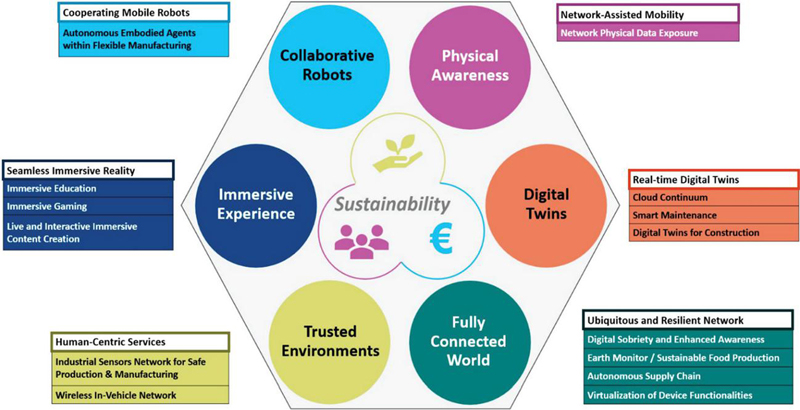
Figure 1 Hexa-X-II’s use cases and use case families.
AI-driven experiences are interactive and bursty, leading to similar requirements for the connectivity [5]. Therefore, networks need to be designed for tail behavior and adaptability and not any more for the busy hour. This requires coordinated intelligence end-to-end across RAN, core, access, transport, and the automation, agentic control, intent, and governance layers above, not siloed optimization [5]. Need to prepare for this and additional other changes in traffic requirements, emerging faster than the traditional changes from one generation to the next, creates a critical mismatch: a demand profile evolving at software speed colliding with an architectural model that moves at generational speed. Solution is a programmable platform with the right acceleration, and an operating model that can evolve at software speed. A recent Nokia blog [6] presents this challenge and provides the solution via three core architectural shifts: programmability and performance at scale, decoupling innovation from hardware via a Hardware Abstraction Layer (HAL) and intelligence in the decision loop.
A HAL allows a Radio Access Network to become a programmable platform with an execution and a learning domain [6]. The separation into domains allows stable operation combined with continuous innovation.
The distribution of AI systems across devices, cloud infrastructure, edge platforms as well as wireless and fixed networks raises an architectural challenge [7]. Current networks were designed to transport data reliably, not to coordinate intelligence dynamically. Therefore, new network architectures will need to support seamless coordination across these distributed environments, consolidating processing, connectivity and intelligence into a unified fabric rather than isolated layers. So, the challenge is enabling intelligent systems to operate reliably, dynamically and at scale across complex interconnected environments.
2. Generation Game and the Hexa Projects
Mobile networks have developed through generations from 1G to 5G. Research work for 6G started end of last decade. Academic research was soon followed by industrial research. European level Flagship project Hexa-X started January 2021 to create joint industrial and academic basis and momentum for 6G. It was followed by the second European level 6G Flagship Hexa-X-II, which ended summer 2025. Hexa-X and Hexa-X-II have had wide societal, economic and scientific impacts at global scale.
Planning for the new generation starts from studying trends and visions and then creating use cases that cannot yet be realized fully with currently available technologies. At the start of the ITU process towards IMT-2030, the next generation, Hexa-X was invited to make a keynote. When 3GPP ramped up use case work for 6G, output from Hexa-X-II was in central role in the joint European level input as 5 out of the 6 representative use cases were prepared, presented, and accepted in 3GPP. See more on Hexa-X-II use cases in Figure 1 and from [8].
Objective of Hexa-X was to lay down the intelligent fabric of technology enablers connecting human, physical, and digital worlds. This reflected the vision of the three worlds to be connected. As human needs were in the center focus, human world was separated from the physical world. This is not in contradiction with the needed balance between humans and their environment – on the contrary, sustainability was a central theme through Hexa-X and Hexa-X-II. Hexa-X outcome is well summarized in [9]. Hexa-X-II continued extending and refining the vision and the use cases, developing the needed technical enablers and building the E2E system view of 6G. Hexa-X-II results have been well summarized in [10] and [11].
As the objectives for 6G were recognized to be much richer than for previous generations, Key Values and related Key Value Indicators were introduced as well as new analysis methods related to them [8, 12].
Hexa projects had wide interactions with global initiatives through e.g., workshops inside Europe (EC, 6G-IA, SNS-JU project, national initiatives) as well as in other continents, like US (Next G Alliance) and Asia (IMT-2030 PG, B5GPC/5GMF/XGMF, 5G/6G Forum, ETRI, ITRI, IITH). Hexa projects were a key contributor in European level white papers, including 2 on 6G overview, sustainability, KPIs and KVIs. In addition, the projects created more than 300+ publications and co-created 2 books [10, 13].
Hexa-X-II projects made around 290 std contributions. Due to the contributions to ETSI, Hexa-X-II received an ETSI award June 2026 at the EUCNC & 6G Summit.
WiTaR (Women in Telecommunications and Research) started from Hexa-X and continued to be supported by Hexa-X-II and many others with more than 30 projects having joined to support the activity.
Hexa projects did create an early vision for 6G, made important impacts based on the use case work, introduced key values and key value indicators, more than 100 technical enablers to address the new needs based on the vision and use cases as well as a 6G E2E system view including architecture. Hexa projects did emphasize the fundamental role of AI in creating 6G – the first generation for which AI has had an important role throughout all the layers of the network. Hexa results were disseminated via more than 300 publications as well as around 290 contributions to standardization.
Currently the momentum in 6G creation has shifted from research to standardization and productization. It remains to be seen that how many of the results of research can be turned into commercially successful features bringing added value to the society.
References
[1] Nokia blog, The AI supercycle explained [Online]. (Accessed on 2026, May 18th). Available: https://www.nokia.com/artificial-intelligence/the-ai-supercycle-explained/, 2026.
[2] P. Mahajan, Beyond the innovation horizon: Advancing connectivity in the AI era, Nokia blog [Online]. (Accessed on 2026, May 18th). Available: https://www.nokia.com/blog/beyond-the-innovation-horizon-advancing-connectivity-in-the-ai-era/, 2026.
[3] O. Sunay and P. Mahajan, When AI becomes physical: The network as a distributed nervous system, Nokia blog [Online]. (Accessed on 2026, May 28th). Available: AI-Native Networks: Distributed Nervous System, 2026.
[4] H. Viswanathan, Physical AI: Redefining RAN and telco monetization, Nokia blog [Online]. (Accessed on 2026, May 28th). Available: Physical AI isn’t “just more traffic” I Nokia, 2026.
[5] P. Mahajan and O. Sunay, From voice to video to AI-shaped traffic: Why network architecture must evolve at software speed, Nokia blog [Online]. (Accessed on 2026, May 28th). Available: Why AI-native traffic demands a new network architecture, 2026.
[6] P. Mahajan, O. Sunay, A. Ed and D. Urbaniak, AI-RAN: Bringing software-speed innovation into the radio network, Nokia blog [Online]. (Accessed on 2026, May 28th). Available: AI-RAN: Bringing software-speed innovation into the radio network http://Nokia.comNokia.com, 2026.
[7] D. Bourse, M. A. Uusitalo and H. Viswanathan, AI-native 6G is now the industry direction, Nokia blog [Online]. (Accessed on 2026, June 18th). Available: AI-native 6G is now the industry direction I Nokia, 2026.
[8] E. Ramos (Ed), Deliverable D1.4 6G value, requirements and ecosystem, Hexa-X-II deliverable [Online]. (Accessed on 2026, June 21st) Available: doi: 10.5281/zenodo.15772634, 2025.
[9] M. A. Uusitalo et al., “6G vision, value, use cases and technologies from European 6G flagship project Hexa-X,” IEEE Access, vol. 9, pp. 160004–160020, 2021.
[10] M. A. Uusitalo, P. Rugeland, M. R. Boldi and A. Nimr (Eds.), 6G to Build a Sustainable Future, Wiley, 2026.
[11] M. A. Uusitalo et al., “Towards environmentally, socially and economically sustainable 6G – Key findings from the European Flagship Hexa-X-II”, accepted for ITU Journal on Future and Evolving Technologies, 2026.
[12] A. Jain et al., “Knowledge graph-based approach for sustainable 6G end-to-end system design,” accepted for IEEE Open Journal of the Communications Society, 2026.
[13] Ö. Bulakci et al., Towards Sustainable and Trustworthy 6G: Challenges, Enablers, and Architectural Design, now Publishers, 2023.
Acknowledgment
Hexa-X-II project has received funding from the Smart Networks and Services Joint Undertaking (SNS JU) under the European Union’s Horizon Europe research and innovation programme under Grant Agreement No 101095759. The author thanks all Hexa-X-II members and collaborators for their invaluable contributions to the project.
Biography

Mikko A. Uusitalo is Head of Research Department Radio Systems Research Finland and Nokia Bell Labs Finland Site Lead. Mikko is the Chair of the Board of the Nokia Foundation. Mikko was leading the European 6G Flagships Hexa-X and Hexa-X-II. He obtained a M.Sc. (Eng.) and Dr.Tech. in 1993 and 1997 and a B.Sc. (Economics) in 2003, all from predecessors of Aalto University. Mikko has been at Nokia since 2000 with various roles, including Principal Researcher and Head of International Cooperation at Nokia Research. Mikko is a founding member of the CELTIC EUREKA and WWRF. Mikko has been nominated among Nokia top inventors six times, Mikko’s H-index is 40+ and i10-index 100+. Mikko has more than 230 granted patents. In 2020 Mikko received the Cross of Merit of the Order of White Rose from the President of Finland. Mikko has and has had numerous board and advisory positions in many important groups in the industry, academia or government side.